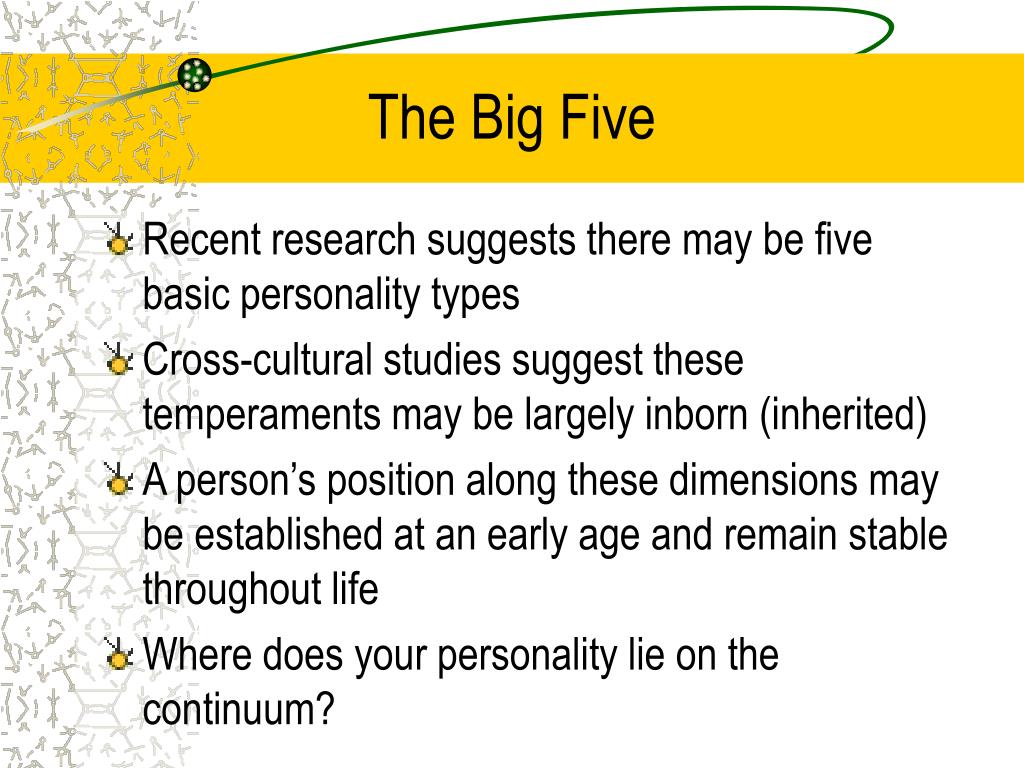
This Trait Appears To Remain Somewhat Stable Throughout Life
This Trait Appears To Remain Somewhat Stable Throughout Life. This study investigated the stability of the big five personality traits in adulthood from age 33 to 42. Which personality trait appears to be stable over the course of a person’s life? Caspi, roberts, & shiner, 2005; According to researcher paul t. Three aspects that do tend to change as we age are anxiety levels, friendliness, and eagerness for novel experiences. They appear to others as less anxious or moody. A person who scores low on this trait are seen as being more emotionally stable and resilient. The big five remain relatively stable throughout most of one’s lifetime. Participants (89 men, 103 women) were drawn from the ongoing jyväskylä longitudinal study of personality and social development. Most of us would like to think of our personalities as relatively stable throughout our lives. Although personality traits show mean level change across the life course, there also appears to be substantial stability of individual differences in personality, even over several decades (caspi & roberts, 2001; But research suggests this is not the case. The big five personality traits are extraversion (also often spelled extroversion), agreeableness, openness, conscientiousness, and neuroticism. Conscientiousness appears to be stable over the course of a person's life. Costa jr., personality remains relatively stable as we grow older.
PPT Personality PowerPoint Presentation, free download ID1108407 from www.slideserve.com
This study investigated the stability of the big five personality traits in adulthood from age 33 to 42. Conscientiousness appears to be stable over the course of a person's life. The big five remain relatively stable throughout most of one’s lifetime. Participants (89 men, 103 women) were drawn from the ongoing jyväskylä longitudinal study of personality and social development. Each trait represents a continuum. Which personality trait appears to be stable over the course of a person’s life? But research suggests this is not the case. Caspi, roberts, & shiner, 2005; Most of us would like to think of our personalities as relatively stable throughout our lives. Three aspects that do tend to change as we age are anxiety levels, friendliness, and eagerness for novel experiences.
Costa Jr., Personality Remains Relatively Stable As We Grow Older.
Although personality traits show mean level change across the life course, there also appears to be substantial stability of individual differences in personality, even over several decades (caspi & roberts, 2001; Most of us would like to think of our personalities as relatively stable throughout our lives. Conscientiousness appears to be stable over the course of a person's life. The big five personality traits are extraversion (also often spelled extroversion), agreeableness, openness, conscientiousness, and neuroticism. This study investigated the stability of the big five personality traits in adulthood from age 33 to 42. According to researcher paul t. Caspi, roberts, & shiner, 2005; Three aspects that do tend to change as we age are anxiety levels, friendliness, and eagerness for novel experiences. The new studies have shown that three basic aspects of personality change little throughout life:
They Appear To Others As Less Anxious Or Moody.
The big five remain relatively stable throughout most of one’s lifetime. But research suggests this is not the case. In this study, we assessed differential stability of personality across the life course,. Each trait represents a continuum. Which personality trait appears to be stable over the course of a person’s life? A person's anxiety level, friendliness and eagerness for novel experiences. Individuals can fall anywhere on the continuum for each trait. Participants (89 men, 103 women) were drawn from the ongoing jyväskylä longitudinal study of personality and social development. A person who scores low on this trait are seen as being more emotionally stable and resilient.